A great man is one who collects knowledge the way a bee collects honey and uses it to help people overcome the difficulties they endure - hunger, ignorance and disease!
- Nikola Tesla

Remember, remember always, that all of us, and you and I especially, are descended from immigrants and revolutionists.
- Franklin Roosevelt

While their territory has been devastated and their homes despoiled, the spirit of the Serbian people has not been broken.
- Woodrow Wilson

“Serbian Americans: History, Culture & Press” Presented at Chicago Cathedral

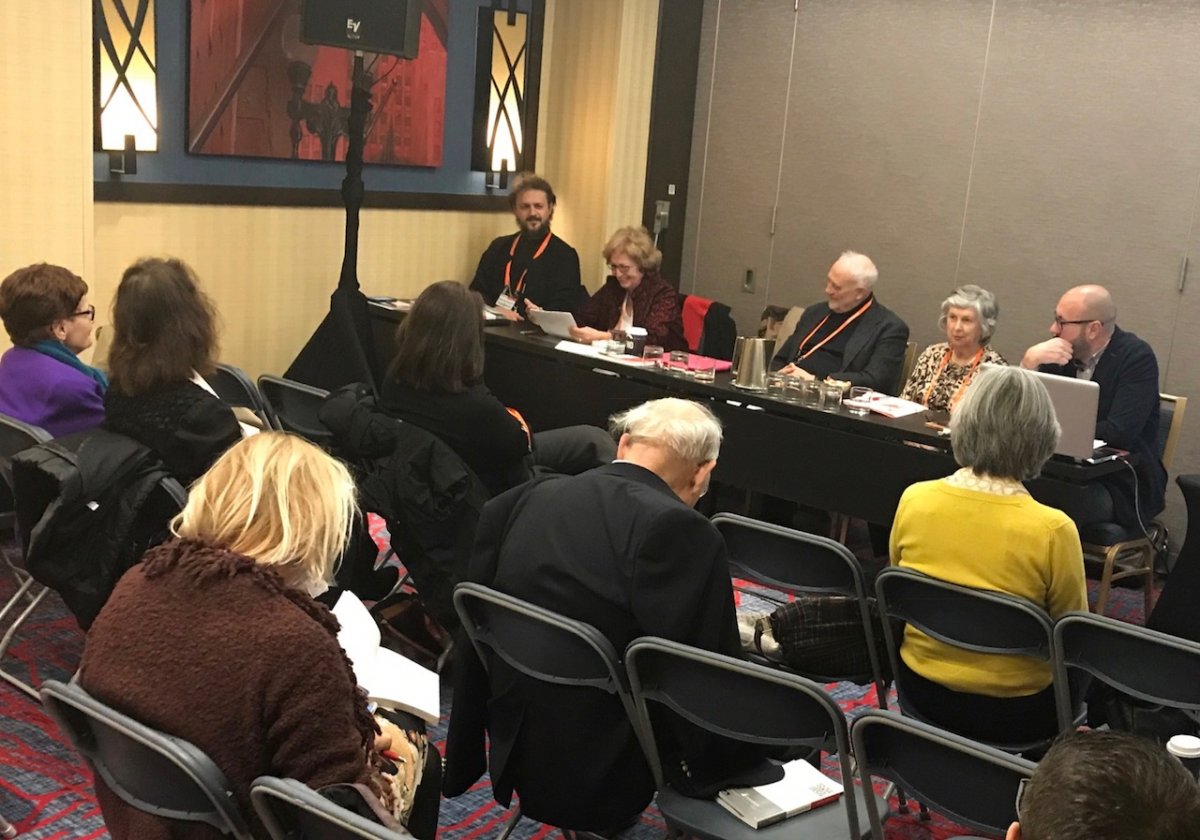
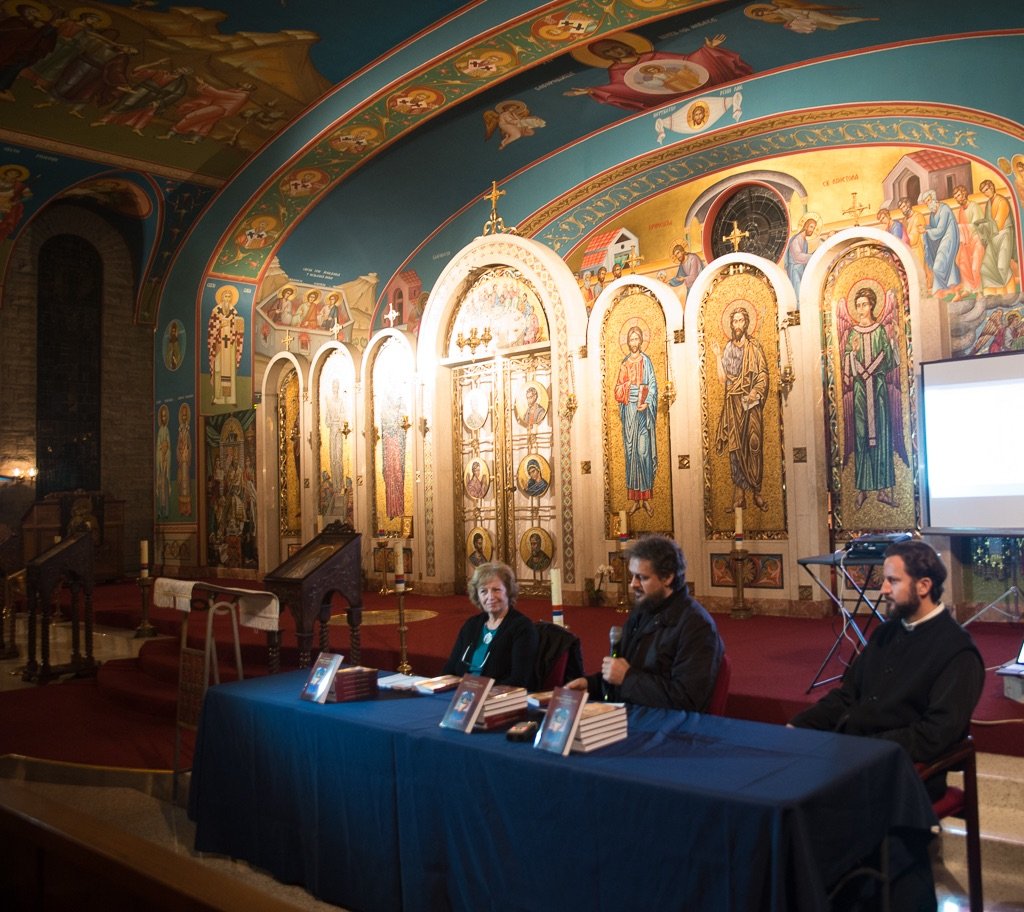
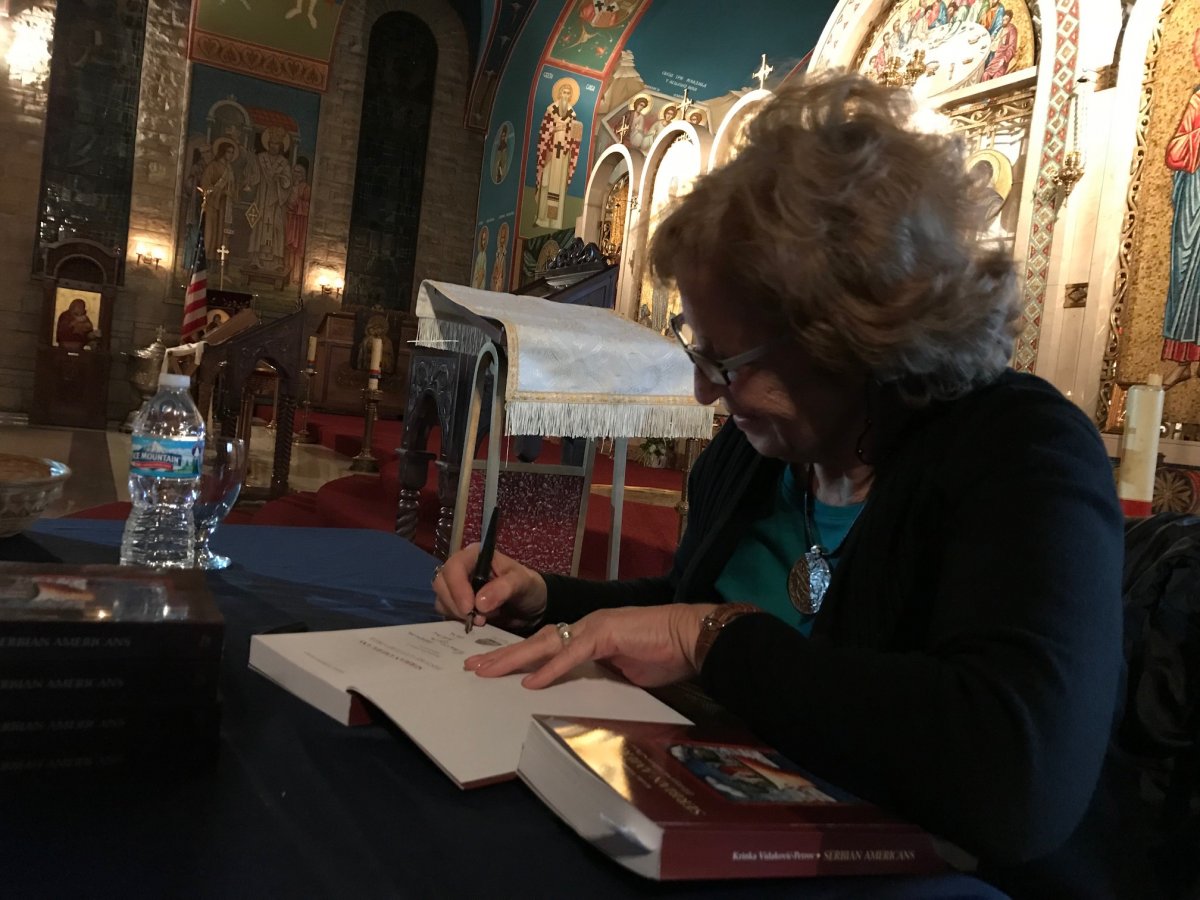
Acclaimed author, academic and diplomat, Krinka Vidakovic-Petrov, presented the new book “Serbian Americans: History, Culture & Press,” at Holy Resurrection Serbian Orthodox Cathedral on Friday, November 10th. The book is the newest edition to the Serbica Americana series of Saint Sebastian Press, the publishing arm of the Western American Diocese of the Serbian Orthodox Church.

His Grace Bishop Maxim of Western America introduced the author and opened the presentation by asking the rhetorical question, “what would America look like without a Serbian presence?” Vidakovic-Petrov’s book, which is based on extensive research and scholarship yet written in a dynamic, readable way, addresses that question by highlighting the various contributions Serbian Americans have made to America and American society since the mid-1800’s.
As His Grace pointed out, the book is the result of a tremendous amount of work compiling and analyzing primary and secondary sources that speak of early Serbian immigration to the United States. But this work is presented through the stories of communities and people whose lives have been, at the same time, interwoven with both the society to which they have come as well as the faith and traditions which they brought with them.

Vidakovic-Petrov acknowledged the contributions of Saint Sebastian Press, the need to make this history available to Serbian Americans who cannot speak Serbian, as well as the historical value of ethnic newspapers and media. She briefly mentioned some of the figures who featured prominently in her research, including Djordje Shagic and Nikola Jovanovic, whom the reader can almost visualize as their pursuits are described in the book.

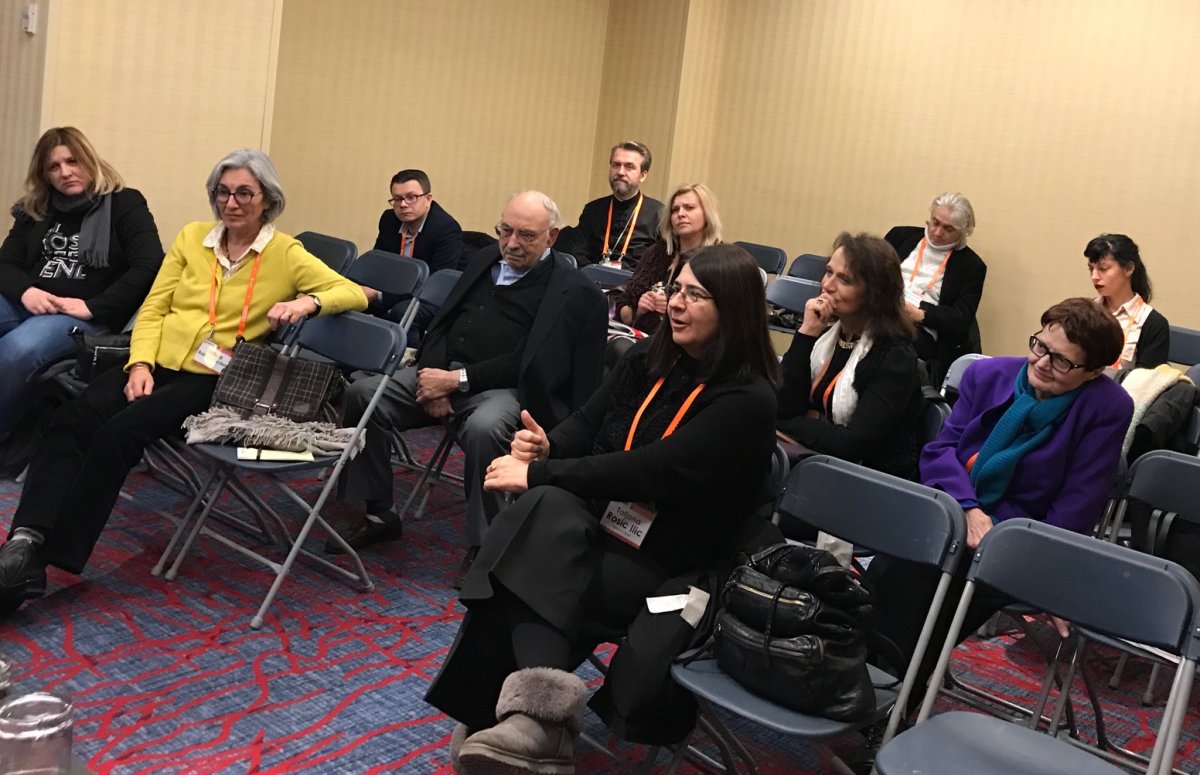
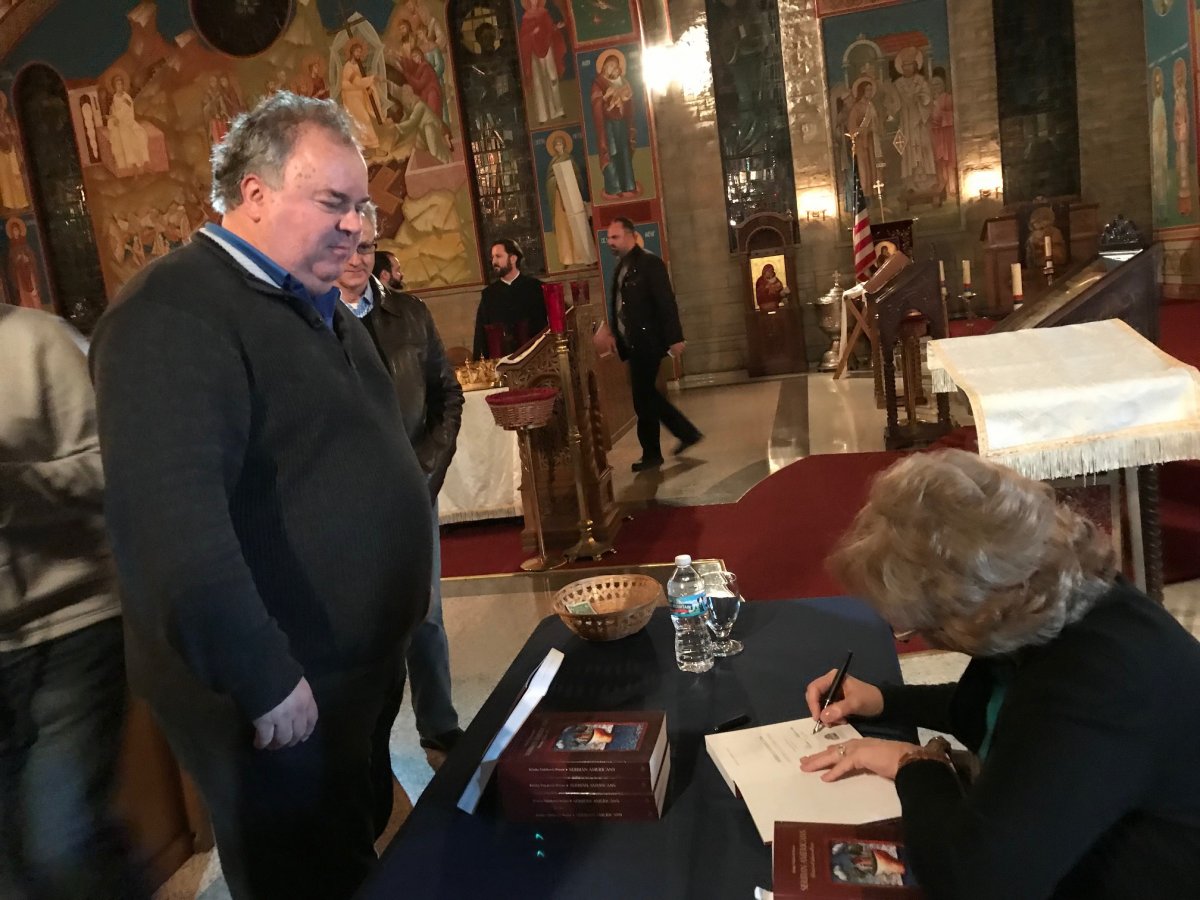
A question and answer session followed the book presentation, and the author signed copies of the book for attendees.
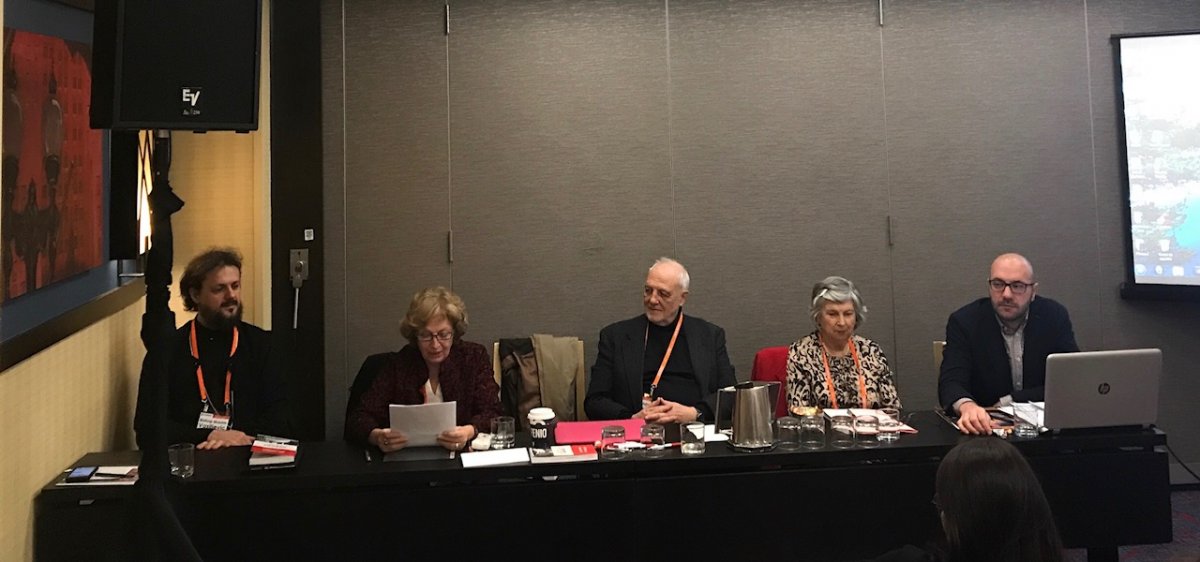


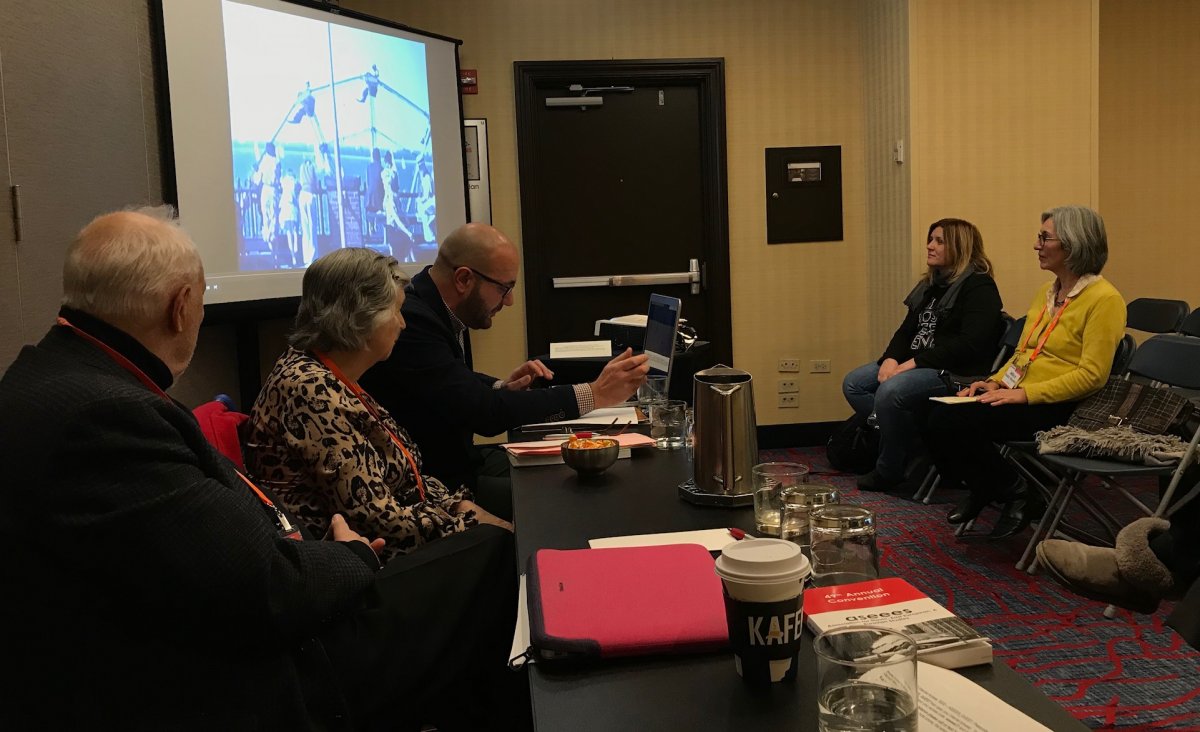
Krinka Vidakovic-Petrov, Sasa Petrov, Predrag Petrovic, Bishop Maxim, and other scholars were in Chicago that weekend in order to take part in the 49th Annual Convention of the ASEEES (Association for Slavic, East European, and Eurasian Studies), held at the Chicago Marriott Downtown Magnificent Mile Hotel on November 9-12, 2017. They spoke at panel/roundtable entitled “Twentieth Century Serbian Writers in the USA.”

Established in 1948, the Association for Slavic, East European, and Eurasian Studies (ASEEES)—a nonprofit, non-political, scholarly society—is the leading international organization dedicated to the advancement of knowledge about Central Asia, the Caucasus, Russia, and Eastern Europe in regional and global contexts.

Nenad Djordjevic

SA


People Directory

Vlade Divac

A first round pick of the Los Angeles Lakers in the 1989 NBA draft, Vlade Divac went on to become one of the first European players to have an impact on the NBA.

In 1985, Vlade Divac was one of 15 young boys from Slovenia, Bosna, Serbia, Montenegro, Croatia and Macedonia that won the gold medal in the University Games. This would prove to be a basketball team that is considered among the best ever assembled. They went on to win a gold medal at the European Junior Championships in 1986, a gold medal at the FIB A World Junior Championships in Bormio, Italy in 1987 (defeating Team USA twice in that tournament), and a silver medal representing Yugoslavia at the 1988 Olympics.

.

Read more ...

Publishing

Notes On Ecumenism

Written in 1972 by St. Abba Justin Popovich, edited by Bishop Athanasius Yevtich, translated from Serbian by Aleksandra Stojanovich, and proofread by Fr Miroljub Ruzich

Abba Justin’s manuscript legacy (on which Bishop Athanasius have been working for a couple of years preparing an edition of The Complete Works ), also includes a parcel of sheets/small sheets of paper (in the 1/4 A4 size) with the notes on Ecumenism (written in pencil and dating from the period when he was working on his book “The Orthodox Church and Ecumenism”; there are also references to the writings of St. Bishop Nikolai [Velimirovich], short excerpts copied from his Sermons, some of which were quoted in the book).

The editor presents the Notes authentically, as he has found them in the manuscripts (his words inserted in the text, as clarification, are put between the slashes /…/; all the footnotes are ours).—In the appendix are present the facsimiles of the majority of Abba’s Notes which were supposed to be included in his book On Ecumenism (written in haste then, but now significantly supplemented with these Notes. The Notes make evident the full extent of Justin’s profundity as a theologian and ecclesiologist of the authentic Orthodoxy).—The real Justin is present in these Notes: by his original language, style, literature, polemics, philosophy, theology, and above all by his confession of the God-man Christ and His Church. He confesses his faith, tradition, experience and his perspective on man, on the world and on Europe—invariably in the Church and from the Church, in the God-man Christ and from Him, just as he did in all of his writings and in his entire life and theologizing.