A great man is one who collects knowledge the way a bee collects honey and uses it to help people overcome the difficulties they endure - hunger, ignorance and disease!
- Nikola Tesla

Remember, remember always, that all of us, and you and I especially, are descended from immigrants and revolutionists.
- Franklin Roosevelt

While their territory has been devastated and their homes despoiled, the spirit of the Serbian people has not been broken.
- Woodrow Wilson

James Scully

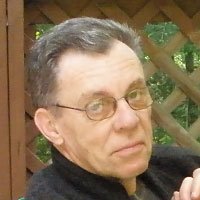
James Scully is the author of 10 books of poetry, including Donatello’s Version (Curbstone Press/Northwestern University Press, 2007), four book-length translations, the seminal essay collection Line Break: Poetry as Social Practice (Curbstone Press/ Northwestern University Press, 1988/2005), and Vagabond Flags: Serbia & Kosovo: Journal, Scrapbook & Notes (Azul Editions, 2009). The founding editor of Art on the Line series (Curbstone Press, 1981-1986), he has been a key figure in the movement to radicalize the theory and practice of American poetry—in how it is lived as well as in how it is written.

Born in 1937 in New Haven, CT, Scully lives in Vermont with his wife, Arlene. They’ve been married since 1960 and have a son, John, and a daughter, Deirdre. His awards include a National Defense Fellowship 1959-1962; an Ingram Merrill Foundation Fellowship (Rome, Italy 1962-63); the Lamont Poetry Award 1967 for The Marches; the Jenny Taine Memorial Award 1971 for translation; a Guggenheim Fellowship (Santiago, Chile 1973-74); National Endowment for the Arts Fellowships 1976-77 and 1990; the Islands & Continents Translation Award 1980; and the Bookbuilders of Boston Award 1983 for book cover design.

.

VAGABOND FLAGS was translated into Serbian and published in Belgrade in September, 2008. Scully characterizes it as "an accidental book that started out as a journal for a few friends who were curious about that part of the world. From there it evolved, with the addition of Balkans historical information, into a scrapbook of relevant documentary materials pertaining to the NATO war on the former Yugoslavia. It was then translated and published at the initiative of the Writers Association of Serbia."

Source: The Complete Plays of Sophocles


SA


People Directory

Bishop Damaskin (Grdanički)

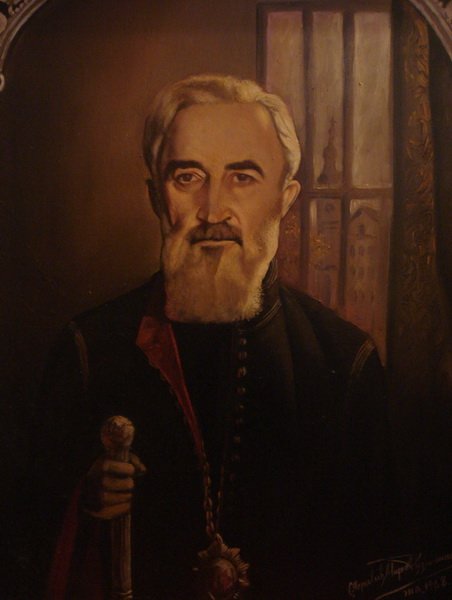
The vacant episcopal post of the American-Canadian Diocese was filled on June 22, 1938 at the Regular Session of the Holy Assembly of Bishops of the Serbian Orthodox Church. Elected as its second Diocesan Hierarch was Bishop Dr. Damaskin (Grdanicki) of Mukachevo and Priashevo.

Bishop Damaskin was born in Leskovac in 1892. He graduated from the nine year St. Sava Seminary in Belgrade, while simultaneously attending the Belgrade Music School. After finishing the Seminary, he taught music at the First High School in Kragujevac. Received into the monastic order at Rakovica Monastery by Archimandrite Platon, later martyred as Bishop of Banja Luka, he studied at the St. Petersburg Theological Academy where he received a Master's Degree in Theology in 1917. He then went to Freiburg, Switzerland where he obtained a Ph.D. in Philosophy.

Read more ...

Publishing

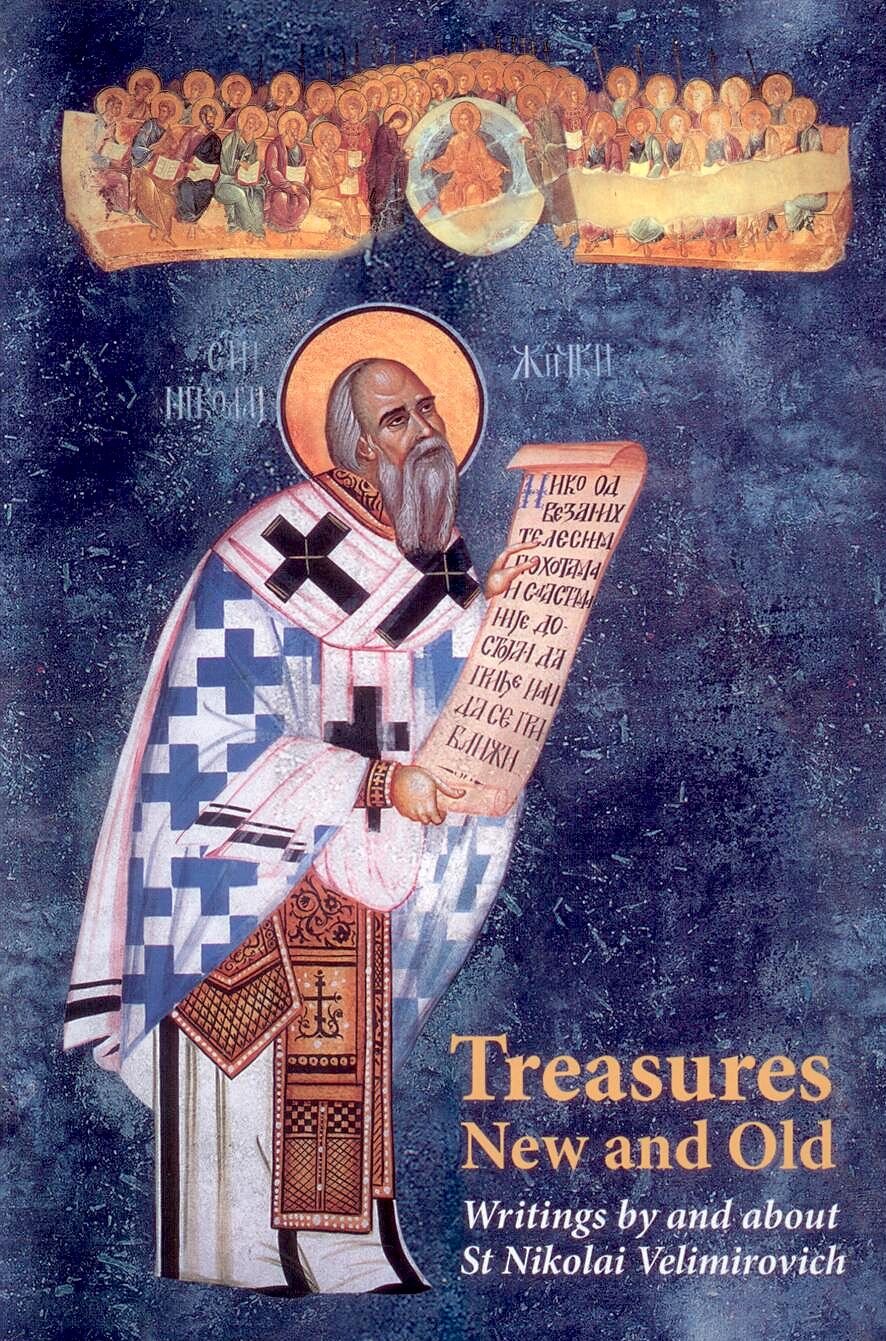
Treasures New and Old

Writings by and about St. Nikolai Velemirovich

Before us is a book about a theologian, a minister, a missionary, a writer, a poet, an apostle, a saint, a man of dialogue: this book is about St. Nikolai Velimirovic, Bishop of Ohrid and Zhicha (1880 - 1956), who along with his many other attributes is regarded, with good reason, as an Enlightener of the Americas, The renewed interest in this man and his works has resulted in the materialization of this book for English-speaking readers who wish to become acquainted with this extraordinary person. The collected texts provide an extensive over view of his life, present important testimonies about his personality, and offer essential insights into his theology. The authors penetrate the depths of his thought with remarkable precision and also elucidate his actions. The authros agree that the appearance of Nikolai Velimirovich marks an era of change in the ecclesiastical and theological paradigm as a result of his spirituality, ecclsiastical work, and theological position.