
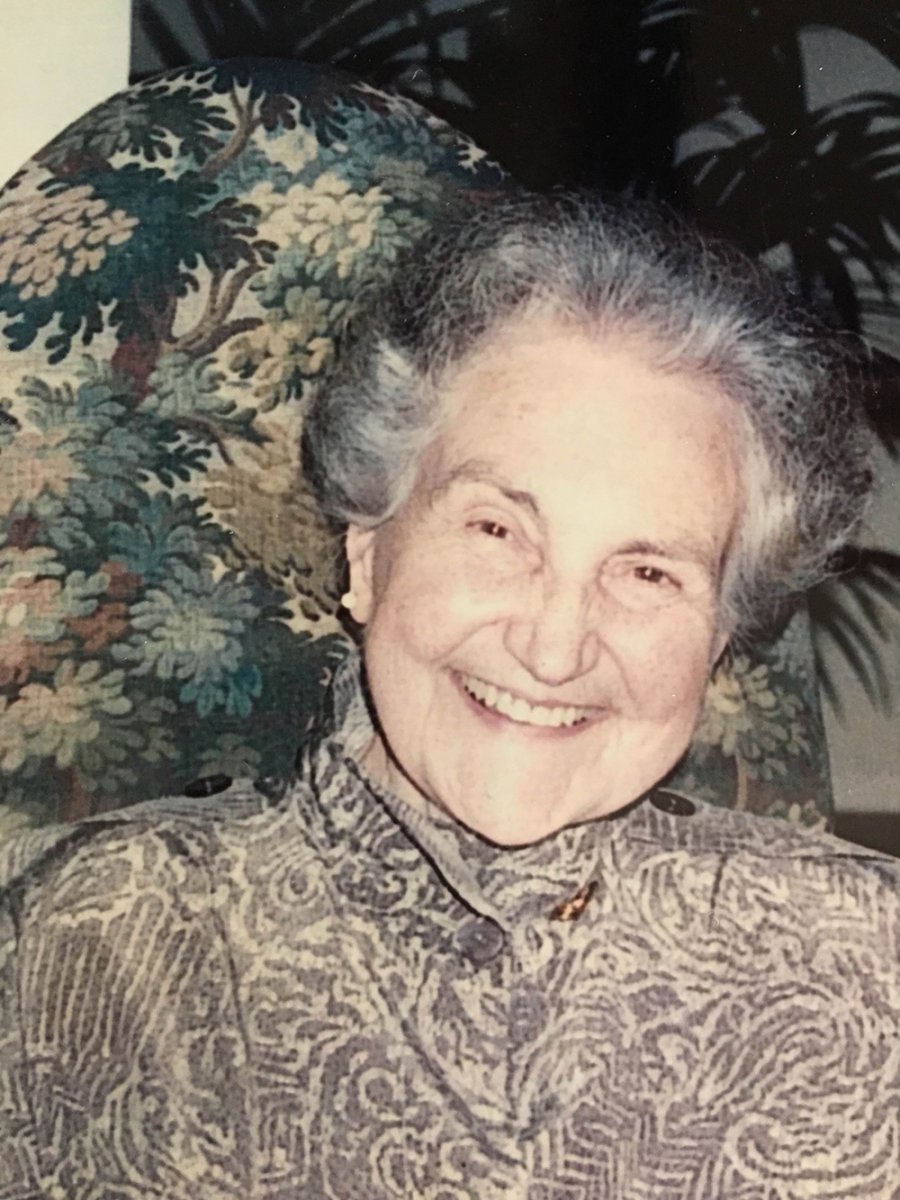
Bibliography: Milena Pavlovic Barili, Life and Work in New York 1939-1945. (catalogue), Beograd 1979.
(Published in the Encyclopedia of Fine Arts of Yugoslavia, Zagreb, 1984)

A great man is one who collects knowledge the way a bee collects honey and uses it to help people overcome the difficulties they endure - hunger, ignorance and disease!
- Nikola Tesla
Remember, remember always, that all of us, and you and I especially, are descended from immigrants and revolutionists.
- Franklin Roosevelt
While their territory has been devastated and their homes despoiled, the spirit of the Serbian people has not been broken.
- Woodrow Wilson
Bibliography: Milena Pavlovic Barili, Life and Work in New York 1939-1945. (catalogue), Beograd 1979.
(Published in the Encyclopedia of Fine Arts of Yugoslavia, Zagreb, 1984)
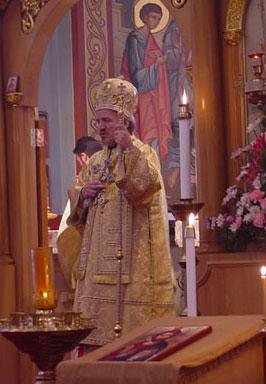
Bishop Mitrofan Kodić, nee Radovan, was born on 4 August, 1951, in the village Ljuša, Šipovo, Bosnia, Yugoslavia. Radovan completed his elementary studies in 1966. He went to study further at the seminary in the Krka monastery in Croatia, Yugoslavia. At the same time, he entered the brotherhood of the monastery. In 1970, Radovan was tonsured to be a monk, and he was given the name Mitrofan on the eve of the Feast of the Entrance of the Most Holy Mother of God into the Temple (3 December/20 November). He was ordained to the Holy Diaconate by Bishop Stefan (Boca) of Žiča. In 1971, the Hierodeacon Mitrofan (Kodić) graduated from the seminary of the Krka Monastery, while on 6 January, 1974, he was ordained to the holy priesthood in the monastery by Bishop Stefan (Boca).
In 1975, the Hieromonk Mitrofan entered the Faculty of Theology in Bucharest, Romania. He completed his studies, and he graduated in 1977. He then returned to the Krka monastery. There, he was assigned to be a “trainee” (supplent) in the Seminary of the Three Holy Hierarchs in the Krka Monastery. In 1987, the Hieromonk Mitrofan was assigned to serve as the rector of the seminary.

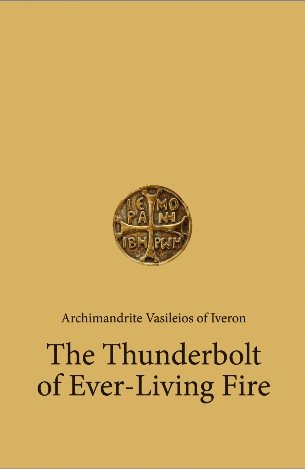
The present book consists of Elder Vaileios' talks, discussions and dialogues in various venues mostly in the United States during his visit in 2011, along with excerpts from his writings selected to complement the themes of his talks. The themes dealt with by Fr. Vasileios so eloquently in this book are extraordinarily wide-ranging; he handles complex and difficult issues in theology, spirituality, liturgics, parish life and monasticism with amazing clarity and insight. He quotes with equal facility from figures as diverse as Heraclitus, Dostoevsky, St. Isacc the Syrian, St. Maximus the Confessor, Stefan Zweig, Andrei Tarkovsky, Vladimir Lossy, Georges Florovsky and St. Nicholas Cabasilas. Above all, there is an exhilarating sense of freedom and innocence in his thought. It is the freedom and innocence of profound faith and spiritual knowledge and childlike simplicity. HIs wisnow is expressed via the "hyperlogic" of a hesychastic spriti, which makes for surprising connections and illuminating insights.
The appearance of this new book by Archimandrite Vaileios is truly a cuase for celebration.
143 pages
ISBN: 978-1-936773-16-9