A great man is one who collects knowledge the way a bee collects honey and uses it to help people overcome the difficulties they endure - hunger, ignorance and disease!
- Nikola Tesla

Remember, remember always, that all of us, and you and I especially, are descended from immigrants and revolutionists.
- Franklin Roosevelt

While their territory has been devastated and their homes despoiled, the spirit of the Serbian people has not been broken.
- Woodrow Wilson

Miroslav Tadić

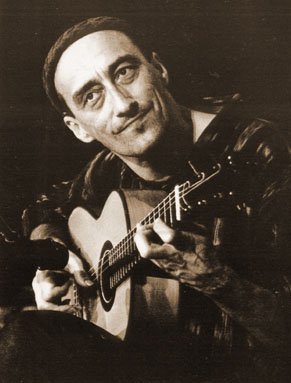
Guitarist, composer and improviser Miroslav Tadic completed his formal music education in the United States after studying in Italy and his native Yugoslavia.

He has performed and recorded in a wide variety of settings and musical styles, ranging from music of the Baroque and Classical periods to Blues, Jazz, and Rock.

Tadic's performing and recording credits include projects with Mark Nauseef, The Los Angeles Opera with Placido Domingo, Howard Levy, Joachim Kühn, L. Shankar, Markus Stockhausen, Dusan Bogdanovic, Vlatko Stefanovski, Teofilovic Brothers, Wadada Leo Smith, David Torn, Maria João, Jack Bruce, The Grande Mothers, Theodosii Spassov, Kudsi Erguner, Djivan Gasparyan, Pandit Swapan Chaudhuri and Ustad Ashish Khan, among others.

.

Tadic has recorded worldwide and his music can be heard on CMP Records, M–A Recordings, Third Ear, Avalon, Croatia Records, ENJA, Nine Winds and Sony/BMG. He performs regularly in Europe, North and South America and Japan.

In recent years Tadic has concentrated on developing an approach to improvisation which combines and juxtaposes musical material drawn from many diverse sources, including Baroque, European classical and North Indian classical music, Flamenco, Eastern European folk traditions, Blues, Jazz, and Rock. He is noted for his pioneering work in applying the elements of classical and flamenco techniques to the electric guitar.

He has composed solo and chamber music which is published by Les Editions Doberman-Yppan. Tadic has written music for numerous experimental film, dance and theatre works and most recently completed music for Croatian feature film “Seventy Two Days” by Danilo Serbedzija.

Since 1985 he has been a professor at the prestigious California Institute of the Arts in Los Angeles.

Official website

For more thorough and detailed information on Miroslav Tadic, please check out these excellent interviews:

Videos:

Solo

With Vlatko Stefanovski

With Vlatko Stefanovski and Theodosii Spassov

With Vlatko Stefanovski, Theodosii Spassov and Swapan Chaudhuri

With Howard Levy

With Howard Levy and Mark Nauseef

http://www.youtube.com/watch?v=r6a8oTGX_cY&feature=related

With the Grande Mothers

With Rade Serbedzija


SA


People Directory

Tomislav Z. Longinović

Professor of Slavic, Comparative Literature and Visual Culture
University of Wisconsin-Madison
1452 Van Hise
1220 Linden Dr
Madison, WI 53706
608-262-4311
This email address is being protected from spambots. You need JavaScript enabled to view it.

Born and raised in Belgrade, Longinovic holds degrees in creative writing, psychology and has his Ph.D in comparative literature.

His books include Borderline Culture (1993), Vampires Like Us (2005), the co-edited and co-translated volume, with Daniel Weissbort: Red Knight: Serbian Women Songs (1992), and the edited volume: David Albahari, Words are Something Else (1996). He is also the author of several works of fiction, both in Serbian (Sama Amerika, 1995) and English (Moment of Silence, 1990).

His most recent book, Vampire Nation: Violence as Cultural Imaginary, was published by Duke University Press in 2011. His research interests include South Slavic literatures and cultures; the Serbian language; literary theory; Central and East European literary history; comparative Slavic studies, translation studies, and cultural studies.

. Read more ...

Publishing

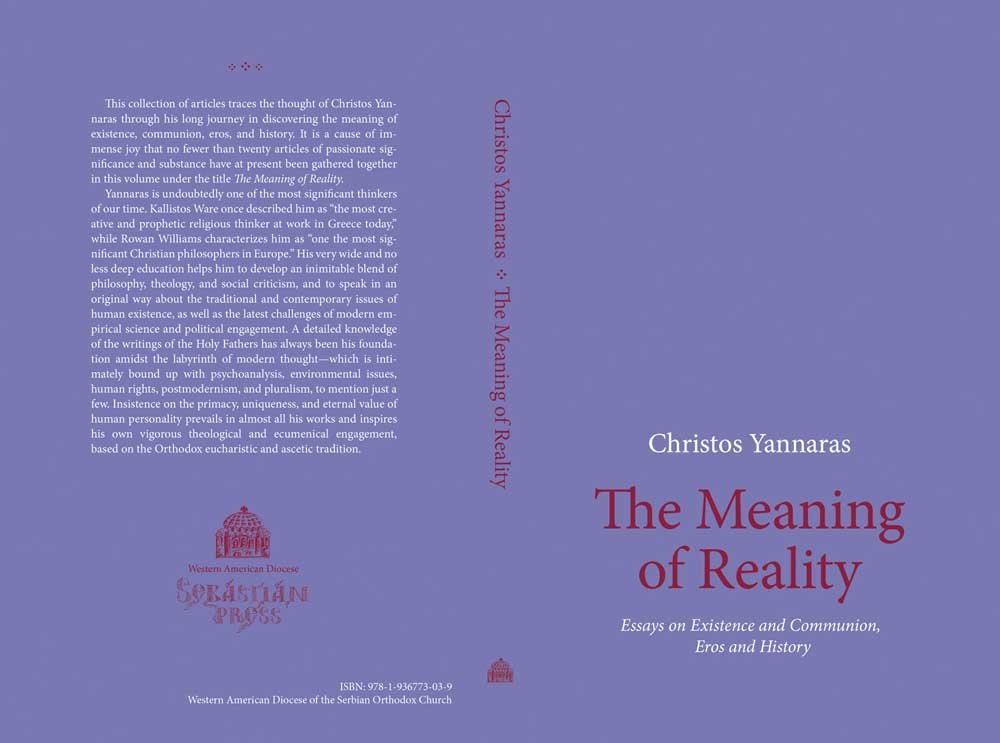
The Meaning of Reality

Essays on Existence and Communion, Eros and History

by Christos Yannaras

The collection of articles traces the thought of Christos Yanaras through his long journey in discovering the meaning of existence, communion, eros, and history. It is a cause of immense joy that no fewer than twenty articles of passionate significance and substance have at present been gathered together in this volume under the title The Meaning of Reality.

Yannaras is undoubtedly one of the most significant thinkers of our time. Kallistos Ware once described him as "the most creative and prophetic religious thinker at work in Greece today," while Rowan Williams characterizes him as "one of the most significant Christian philosophers in Europe." His very wide and no less deep education helps him to develop an inimitable blend of philosophy, theology, and social criticism, and to speak in an original way about the traditional and contemporary issues of human existence, as well as the latest challenges of modern empirical science and political engagement. A detailed knowledge of the writings of the Holy Fathers has always been his foundation amidst the labyrinth of modern thought - which is inimately bound up with psychoanalysis, environmental issues, human rights, postmodernism, and pluralism , to mention just a few. Insistence on the primacy, uniqueness, and eternal value of human personality prevails in almost all his works and inspires his own vigorous theological and ecumenical engagement, based on the Orthodox eucharistic and ascetic tradition.