A great man is one who collects knowledge the way a bee collects honey and uses it to help people overcome the difficulties they endure - hunger, ignorance and disease!
- Nikola Tesla

Remember, remember always, that all of us, and you and I especially, are descended from immigrants and revolutionists.
- Franklin Roosevelt

While their territory has been devastated and their homes despoiled, the spirit of the Serbian people has not been broken.
- Woodrow Wilson

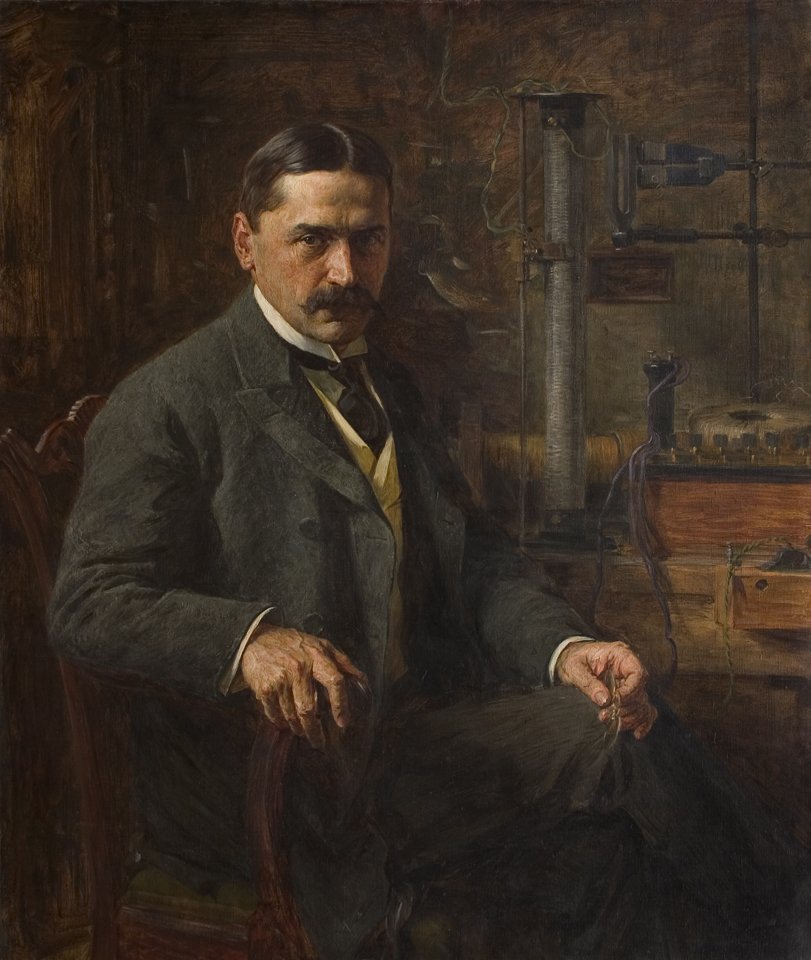
Mihajlo Pupin

Mihajlo Idvorski Pupin, Ph.D, LL.D. (October 4th, 1858 - March 12th, 1935) was a Serbian physicist, best known for devising means of greatly extending the range of long-distance telephone communication by placing loading coils (of wire) at predetermined intervals along the transmitting wire (known as pupinization).

Pupin was born in the village Idvor, Banat (then the Austro-Hungarian Empire) to a Serbian family. Pupin emigrated to U.S. when he was only 16.

He spent the next few years in a series of menial jobs, learning English and American ways. He entered Columbia College in 1879, where he became known as an exceptional athlete and scholar. A popular student, he was elected president of his class in his junior year. He graduated with honors in 1883 at Columbia College, New York and became an American citizen at the same time. He obtained his Ph.D. at the University of Berlin under Hermann von Helmholtz and in 1889, he returned to Columbia University to become a teacher of mathematical physics in the newly formed Department of Electrical Engineering. Pupin's research pioneered carrier wave detection and current analysis.

Pupin's 1894 invention, now known as "Pupin coil", greatly extended the range of long-distance telephones. This was a very important invention and he became wealthy when American Telephone and Telegraph acquired the rights to the patent. Pupin's work followed closely on the pioneering work of the English physicist and mathematician Oliver Heaviside, which predates Pupin's patent by some 7 years. Pupin was among the first to replicate Roentgen's production of x-rays in the United States. He in 1896 invented the method of placing a sheet of paper impregnated with fluorescent dyes next to the photographic plate, thereby permitting an exposure of only a few seconds, rather than that of an hour or more. He also carried out the first medically-oriented studies of the utility of x-rays in the United States. In 1901, he became a professor and, in 1931, a professor emeritus of Columbia University.

In 1911 Pupin became a consul of Kingdom of Serbia in New York. In his speech to Congress on January 8, 1918, known as the Fourteen Points speech, U.S. president Woodrow Wilson, inspired by his conversations with Pupin, insisted on the restoration of Serbia and Montenegro, as well as autonomy for the peoples of the Austria/Hungary monarchy.

Michael Pupin's autobiography, "From Immigrant to Inventor", won the Pulitzer Prize in 1924. He also wrote "The New Reformation" (1927) and "Romance of the Machine" (1930), as well as many technical papers. In his many popular writings, Pupin advanced the view that modern science supported and enhanced belief in God. Pupin was active with the Serb emigre societies in the USA. He was the first president and founder of the Serbian National Defense Council of America. In 1918, professor Pupin edited a book on Serbian monuments, under the title "Serbian Orthodox Church".

Pupin was president of the New York Academy of Science, member of the French Academy of Science and the Serbian Academy of Science. Pupin was also president of the Institute of Radio Engineers in 1917 and the American Institute of Electrical Engineers in 1925-1926.In 1920, he received AIEE's Edison Medal for his work in mathematical physics and its application to the electric transmission of intelligence. Columbia University's Pupin Hall, the site of Pupin Physics Laboratory, is a building completed in 1927 and named after him in 1935. A small crater on the Moon was named in his honor.

Book

New York Academy of Sciences - A Tribute to Michael Pupin
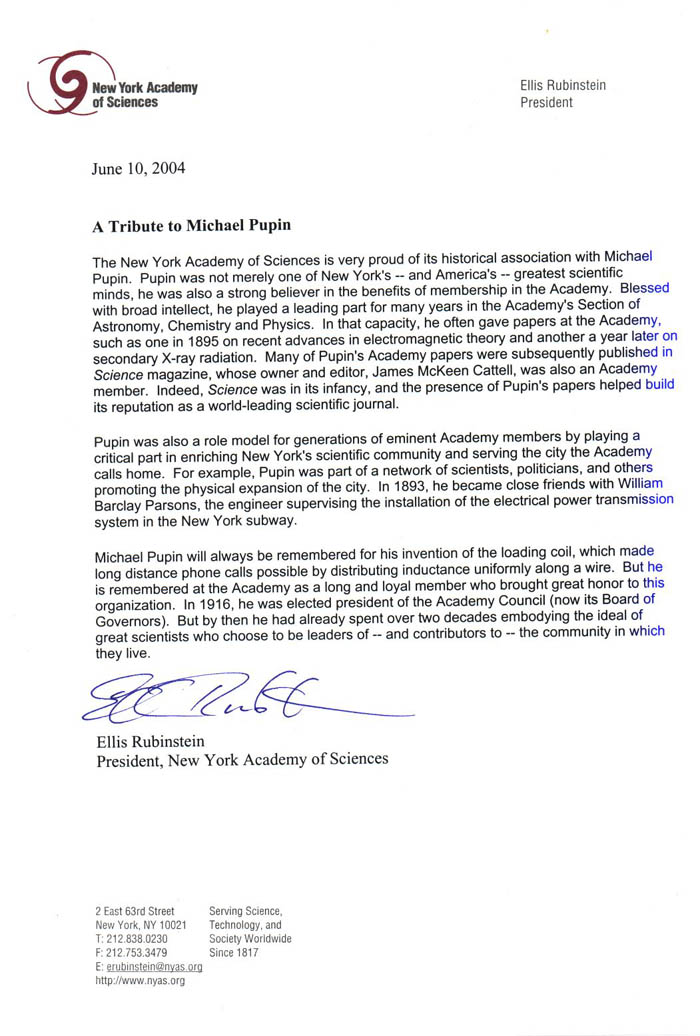
New York Academy of Sciences - A Tribute to Michael Pupin


Mihajlo Pupin – slikar
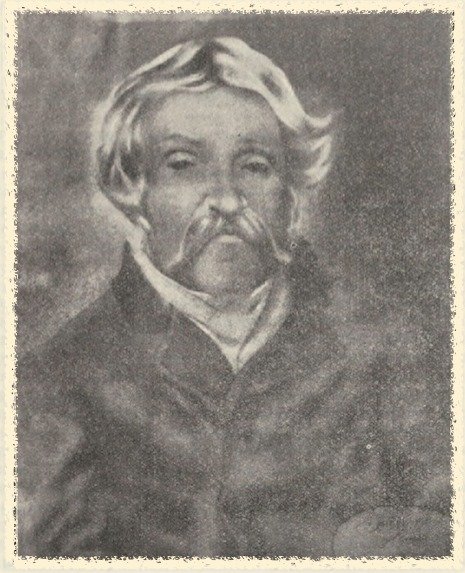
Našeg genija, Mihajla Pupina, znamo kao velikog naučnika i dobrotvora, ali njegov umetnički talenat je manje poznat. U trećem razredu realke u Pančevu (1871/72), gledajući u malu fotografiju, naslikao je krejonom portret Koste Isakovića trgovca iz Farkaždina, veličine 47cmx40cm, i to tako živopisno da zavređuje svaku pohvalu. Ova slika se danas nalazi u Narodnom muzeju Zrenjanin, a u desnom donjem uglu i dalje je vidljiv potpis autora – Mihajla Pupina.


SA


People Directory

Marta Milosevic-Brankovic

Marta Milosevic-Brankovic was born in Belgrade, Serbia. She has captured the attention of audience and critics alike since her concerto debut at Ganz Rudolph Hall in Chicago in 2005 where one of the most famous pianists alive, Abbey Simon (Professor at the Juilliard School) personally attended the concert and highly acclaimed her performance of Bach and Chopin. At the age of six Marta took her first piano lesson and already a year later she played her first public concert. She was 21 when she graduated at the Music Art Academy in Belgrade as the youngest student with the highest GPA in the generation. She received her early musical training in class of Russian Professor Jakuthon Mlhailovich, a graduate from the Moscow Conservatory. At the same time she has also completed Media studies at the University of Art in Belgrade. During her studies, she worked with eminent artists from her country and auended a number of piano master courses of the following Professors: Sijavus Gadzijev (Moscow). Tamara Stefanovic (Koeln). Dr. David Abot (Zurich-New York), Dr. Tatjana Rankovich (New York), Dr. Omitry Rachmanov (Chicago-New York) and many others.

Read more ...

Publishing

Holy Emperor Constantine and the Edict of Milan

by Bishop Athanasius (Yevtich)

In 2013 Christian world celebrates 1700 years since the day when the Providence of God spoke through the holy Emperor Constantine and freedom was given to the Christian faith. Commemorating the 1700 years since the Edict of Milan of 313, Sebastian Press of the Western American Diocese of the Serbian Orthodox Church published a book by Bishop Athanasius Yevtich, Holy Emperor Constantine and the Edict of Milan. The book has 72 pages and was translated by Popadija Aleksandra Petrovich. This excellent overview of the historical circumstances that lead to the conversion of the first Christian emperor and to the publication of a document that was called "Edict of Milan", was originally published in Serbian by the Brotherhood of St. Simeon the Myrrh-gusher, Vrnjci 2013. “The Edict of Milan” is calling on civil authorities everywhere to respect the right of believers to worship freely and to express their faith publicly.

The publication of this beautiful pocket-size, full-color, English-language book, has been compiled and designed by Bishop Athanasius Yevtich, a disciple of the great twentieth-century theologian Archimandrite Justin Popovich. Bishop Athanasius' thought combines adherence to the teachings of the Church Fathers with a vibrant faith, knowledge of history, and a profound experience of Christ in the Church.

In the conclusion of the book, the author states:"The era of St. Constantine and his mother St. Helena, marks the beginning of what history refers to as Roman, Christian Empire, which was named Byzantium only in recent times in the West. In fact, this was the conception of a Christian Europe. Christian Byzantine culture had a critical effect on Europe; Europe was its heir, and then consciously forgot it. Europe inherited many Byzantine treasures, but unfortunately, also robbed and plundered many others for its own treasuries and museums – not only during the Crusades, but during colonial rule in the Byzantine lands as well. We, the Orthodox Slavs, received a great heritage of the Orthodox Christian East from Byzantium. Primarily, Christ’s Gospel, His faith and His Church, and then, among other things, the Cyrillic alphabet, too."