A great man is one who collects knowledge the way a bee collects honey and uses it to help people overcome the difficulties they endure - hunger, ignorance and disease!
- Nikola Tesla

Remember, remember always, that all of us, and you and I especially, are descended from immigrants and revolutionists.
- Franklin Roosevelt

While their territory has been devastated and their homes despoiled, the spirit of the Serbian people has not been broken.
- Woodrow Wilson

Film Screening of "Enclave" followed by Q&A with Director Goran Radovanović

Please join the Njegos Endowment for Serbian Language and Culture at Columbia University's East Central European Center and the Harriman Institute for a screening of the film Enclave (2015) followed by a Q&A with director Goran Radovanović.

Synopsis: A Christian boy, determined to create a proper community burial for his late grandfather, crosses enemy lines and makes friends among the Muslim majority in deeply divided, war-torn Kosovo. Focused on a tiny Serb community living in a UN-protected enclave in Muslim Kosovo, Enclavelooks at the legacy of ethnic cleansing and internecine conflict through the eyes of a small boy, Nenad. Every day Nenad is taken to school from his father’s farm in a KFOR armored car to study alone in a school with no other pupils. Like any other boy of his age, all Nenad wants are some friends his own age. Each day, through narrow observation slits in the military vehicle he sees two Albanian boys and a shepherd boy – who has lost his father in the war and hates Serbs.

The film won an audience award last June after a competition screening at the Moscow International Film Festival, and is Serbia’s nomination for best foreign-language Oscar.
(Source: HollywoodReporter)

For more information and to view a trailer, visit the film’s website here.

Director Goran Radovanović is writer and director of both feature and documentary films. Born in Belgrade in 1957, Radovanović studied Art History under Belgrade’s Faculty of Philosophy. His films have been shown at numerous film festivals worldwide. He is a guest professor at EICTV (International Film and Television School), San Antonio de los Banos, Cuba. Enclave is his second film.

Tuesday, March 1, 2016, 6:30 pm
Marshall D. Shulman Seminar Room (1219 IAB, 420 West 118th St.)


SA


People Directory

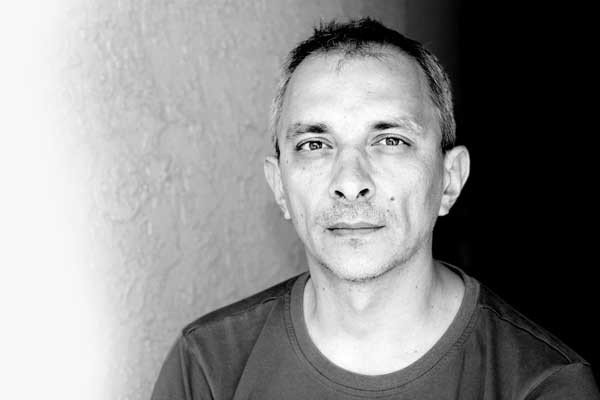
Željko Đukić

TUTA Theatre Chicago's Zeljko Djukic Awarded Fulbright Scholar Grant and Names Successor

Zeljko Djukic, who, in 2001, co-founded the TUTA Theatre Chicago as Artistic Director, will now assume the role of Founding Director. He has elected TUTA Ensemble Member Jacqueline Stone to assume the role of Artistic Director starting September 1.

.
Read more ...

Publishing

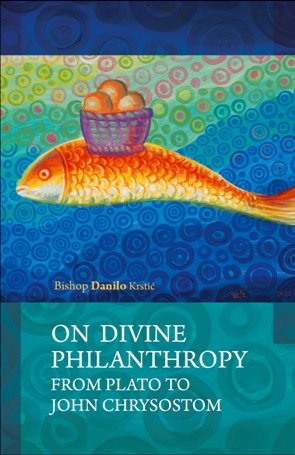
On Divine Philanthropy

From Plato to John Chrysostom

by Bishop Danilo Krstic

This book describes the use of the notion of divine philanthropy from its first appearance in Aeschylos and Plato to the highly polyvalent use of it by John Chrysostom. Each page is marked by meticulous scholarship and great insight, lucidity of thought and expression. Bishop Danilo’s principal methodology in examining Chrysostom is a philological analysis of his works in order to grasp all the semantic shades of the concept of philanthropia throughout his vast literary output. The author overviews the observable development of the concept of philanthropia in a research that encompasses nearly seven centuries of literary sources. Peculiar theological connotations are studied in the uses of divine philanthropia both in the classical development from Aeschylos via Plutarch down to Libanius, Themistius of Byzantium and the Emperor Julian, as well as in the biblical development, especially from Philo and the New Testament through Origen and the Cappadocians to Chrysostom.

With this book, the author invites us to re-read Chrysostom’s golden pages on the ineffable philanthropy of God. "There is a modern ring in Chrysostom’s attempt to prove that we are loved—no matter who and where we are—and even infinitely loved, since our Friend and Lover is the infinite Triune God."

The victory of Chrysostom’s use of philanthropia meant the affirmation of ecclesial culture even at the level of Graeco-Roman culture. May we witness the same reality today in the modern techno-scientific world in which we live.