A great man is one who collects knowledge the way a bee collects honey and uses it to help people overcome the difficulties they endure - hunger, ignorance and disease!
- Nikola Tesla

Remember, remember always, that all of us, and you and I especially, are descended from immigrants and revolutionists.
- Franklin Roosevelt

While their territory has been devastated and their homes despoiled, the spirit of the Serbian people has not been broken.
- Woodrow Wilson

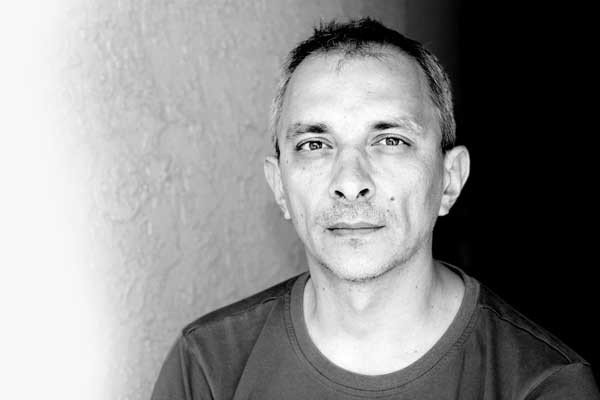
Chicagoan of the Year in Classical Music: Vladimir Kulenovic, a conductor with an uncommon passion

Vladimir Kulenovic, music director of the north suburban Lake Forest Symphony, is at once selfish and selfless, useful qualities for a bright, ambitious, young musician out to make a name for himself in the fast track of symphonic conducting.

Selfish, because the Belgrade, Serbia-born American conductor's career ambitions are, by his own admission, limitless. Now in his second year with the Lake Forest professional orchestra, Kulenovic, who is 35 and lives in Evanston, has energized the ensemble and its audience. The Solti Foundation U.S. has taken notice. Having already awarded him career-assistance grants in 2012 and 2013, the foundation, which supports young conductors of exceptional promise, honored him a third time by naming him its $25,000 Solti Conducting Fellow for 2015, a prestigious honor indeed.

More @Chicago Tribune


SA


People Directory

Željko Đukić

TUTA Theatre Chicago's Zeljko Djukic Awarded Fulbright Scholar Grant and Names Successor

Zeljko Djukic, who, in 2001, co-founded the TUTA Theatre Chicago as Artistic Director, will now assume the role of Founding Director. He has elected TUTA Ensemble Member Jacqueline Stone to assume the role of Artistic Director starting September 1.

.
Read more ...

Publishing

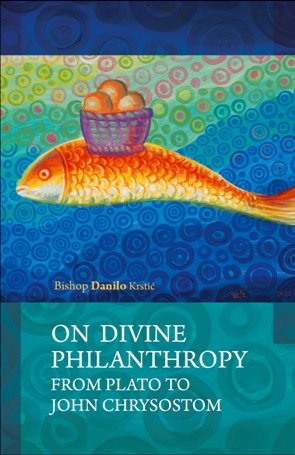
On Divine Philanthropy

From Plato to John Chrysostom

by Bishop Danilo Krstic

This book describes the use of the notion of divine philanthropy from its first appearance in Aeschylos and Plato to the highly polyvalent use of it by John Chrysostom. Each page is marked by meticulous scholarship and great insight, lucidity of thought and expression. Bishop Danilo’s principal methodology in examining Chrysostom is a philological analysis of his works in order to grasp all the semantic shades of the concept of philanthropia throughout his vast literary output. The author overviews the observable development of the concept of philanthropia in a research that encompasses nearly seven centuries of literary sources. Peculiar theological connotations are studied in the uses of divine philanthropia both in the classical development from Aeschylos via Plutarch down to Libanius, Themistius of Byzantium and the Emperor Julian, as well as in the biblical development, especially from Philo and the New Testament through Origen and the Cappadocians to Chrysostom.

With this book, the author invites us to re-read Chrysostom’s golden pages on the ineffable philanthropy of God. "There is a modern ring in Chrysostom’s attempt to prove that we are loved—no matter who and where we are—and even infinitely loved, since our Friend and Lover is the infinite Triune God."

The victory of Chrysostom’s use of philanthropia meant the affirmation of ecclesial culture even at the level of Graeco-Roman culture. May we witness the same reality today in the modern techno-scientific world in which we live.