A great man is one who collects knowledge the way a bee collects honey and uses it to help people overcome the difficulties they endure - hunger, ignorance and disease!
- Nikola Tesla

Remember, remember always, that all of us, and you and I especially, are descended from immigrants and revolutionists.
- Franklin Roosevelt

While their territory has been devastated and their homes despoiled, the spirit of the Serbian people has not been broken.
- Woodrow Wilson

Mihajlo Idvorski Pupin

Mihajlo Idvorski Pupin (October 9, 1854, Idvor, Serbia – March 12, 1935, New York, NY) was a Serbian physicist, physical chemist, philanthropist. Pupin is best known for his numerous patents, including a means of greatly extending the range of long-distance telephone communication by placing loading coils at predetermined intervals along the transmitting wire. Together with his wife Sara Catharine and daughter Barbara Pupin-Smith is buried at the prestigious Woodlawn Cemetery, where Orthodox Serbs and others, local and international, regularly pay their respects at the grave of this great son of Serbia.

Woodlawn Cemetery

Joining a rarified roster of 2,500 sites nationwide, including our St. Sava Pro-Cathedral in Manhattan, Woodlawn Cemetery, one of the largest cemeteries in New York, was designated in 2011 as a National Historic Landmark. Located in the Woodlawn area of the Bronx, Woodlawn Cemetery was opened during the Civil War in 1863. Today it is an oasis in an urban setting, with more than 310,000 individuals interred on its grounds. This cemetery attracts over 100,000 visitors from around the world each year. The National Park Service describes the cemetery as “a popular final resting place for the famous and powerful,” such as Princess Anastasia of Greece and Denmark; authors Countee Cullen, Nellie Bly, and Herman Melville; musicians Irving Berlin, Miles Davis, Duke Ellington, W. C. Handy, and Max Roach; along with businessmen, such as shipping magnate Archibald Gracie and department store founder, Rowland Hussey Macy, and philanthropist Augustus Juilliard, who established the Julliard School of Music.

SA


People Directory

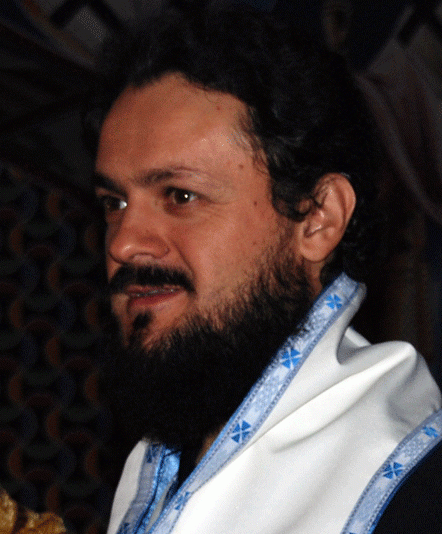
Bishop Maxim (Vasiljević)

(2006–)

For the last eleven years the ruling bishop of the Western American Diocese is Maxim (Vasiljević,) well known in academic circles since he holds several academic titles and is professor of the Faculty of Orthodox Theology at the University of Belgrade. Maxim (secular name Milan Vasilje¬vić) was born on June 27, 1968 in Foča, Yugoslavia, into a family of a priest. His father Lazar is a priest and mother Radmila, nee Todorović.

After finishing elementary school in Sarajevo (1983), he studied Seminary school in Belgrade (finished in 1988), served the army, and enrolled into the Faculty of Orthodox Theology in the same city.

He was tonsured a monk in Tvrdos Monastery, Bosnia and Herzegovina, on August 18, 1996, by Bishop Atanasije of Herzegovia, who also ordained him a deacon (1996) and priest in 2001.

Bishop Maxim graduated from the Faculty of Orthodox Theology at the University of Belgrade in 1993. He completed his Masters of Theology at the University of Athens in 1996, and then three years later, in 1999, at the same University, he defended his doctorate in the field of Dogmatics and Patristics with the title, “Participation in God” in the Theological Anthropology of St. Gregory Nazianzen and St. Maximus the Confessor.

Read more ...

Publishing

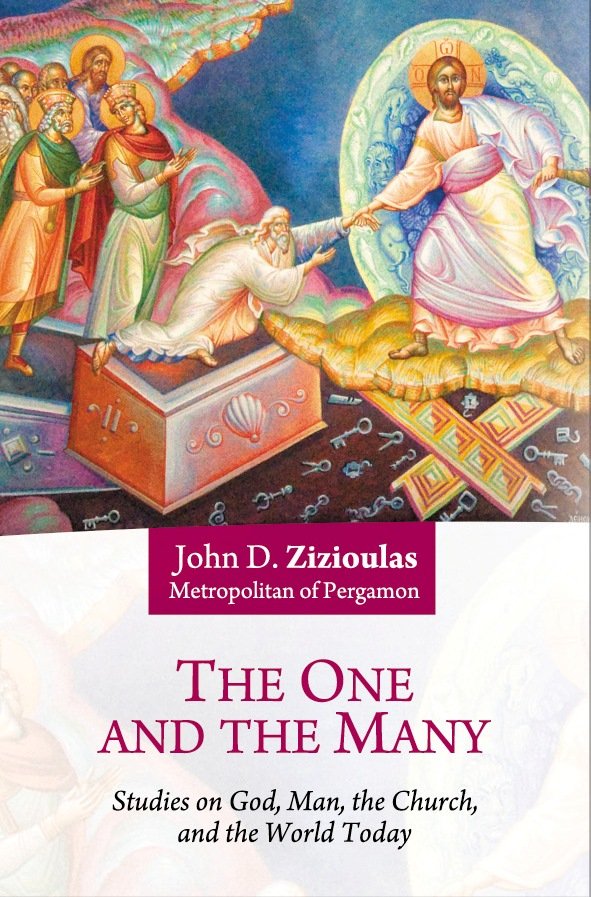
The One and the Many

Studies of God, Man, the Church, and the World today

by Metropolitan John D. Zizioulas

This volume offers a collection of Zizioulas articles which have appeared mostly in English, and which present his trinianatarian doctrine of God, as well as his theological account of the Church as the place in which freedom and communion are actualized. The title, The One and the Many, suggests the idea of a profound relationship that exists between the Persons in the Holy Trinity, between Christ and the Church, between one Catholic Church and many catholic Churches. On each of these levels of communion, each one is called to receive from one another and indeed to receive one another. And while this is understandable at the Triadological and Christological levels, it raises all sorts of fundamental ecclesiological questions, since the highest point of unity in this context is both the mutual ecclesial-eucharistic recognition and agreement on doctrine and canonical-eccelesiological organization.

Read more ...