A great man is one who collects knowledge the way a bee collects honey and uses it to help people overcome the difficulties they endure - hunger, ignorance and disease!
- Nikola Tesla

Remember, remember always, that all of us, and you and I especially, are descended from immigrants and revolutionists.
- Franklin Roosevelt

While their territory has been devastated and their homes despoiled, the spirit of the Serbian people has not been broken.
- Woodrow Wilson

Изложба о Пупину и Тесли

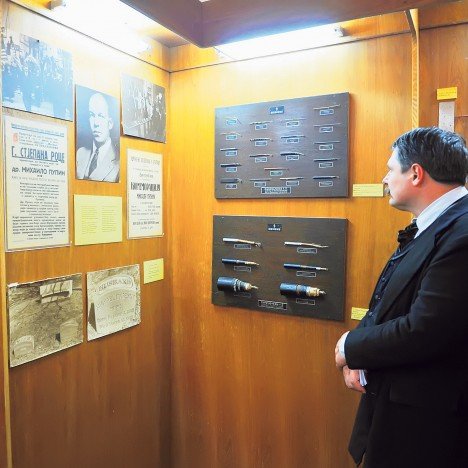
У родном месту научника и проналазача Михајла Пупина (1854-1935) јуче је представљена изложба виртуелног музеја на адреси www.mihajlopupin.rs, која ближе описује однос Пупина са Николом Теслом. Изложба представља једну од активности којима ће 2014. бити обележено 160 година од Пупиновог рођења. . Виртуелни музеј који је почео са радом у мају ове године одаје почаст Пупину – почасном доктору 18 универзитета, добитнику Пулицерове награде за аутобиографију Са пашњака до научењака (чији делови су били обавезна лектира у америчким школама) и почасном конзулу Србије у САД. Посетиоци имају прилику да се упознају са животном причом српског велика кроз неколико целина: путовања кроз Идвор, Америку, професорски рад, признања, аутобиографију, научни рад, национално-политички допринос, легат у Народном музеју, легат Универзитетској библиотеци, доброчинствима. Такође, сајт www.idvor.rs доступан је посетиоцима на српском, енглеском и француском језику.

Изложба потцртава сличности Пупина и Тесле – однос са мајкама које су им биле велика подршка и узори, подсећа на њихова духовна искуства и ставове према традицији будући да су обојица црпела из народног стваралаштва и сматрала да судбина једног народа није вођена само напорима изузетних људи, већ и снагом традиције те земље.

Оба научника су били велики поштоваоци уметности. Тесла се дивио делу Лазе Костића и преводио је песме Јована Јовановића Змаја, а Пупин је слушао савете сликара Уроша Предића о томе која дела треба да одабере и остави као поклон својој земљи.

Извор: Политика, 6. 10. 2013.


SA


People Directory

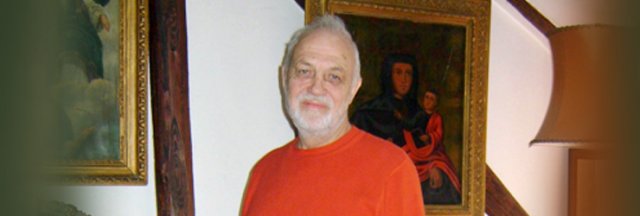
Aleksandar Petrov

Aleksandar Petrov, born in Nis (Yugoslavia) 1938, received his Ph.D. at the University of Zagreb. For many years he was Senior Research Fellow at the Institute of Literature and Art in Belgrade and Director of the History of Literature Department.

As an outstanding poet and novelist, Aleksandar Petrol is featured in the Dictionary of Literary Biography (v. 181, 242-250 p.p., Washington D.C. and London 1997) as one of the most important Serbian writers of the post World War II period. He has served as President of the Writers’ Association of Serbia and Acting President of the Writers’ Association of the former Yugoslavia. Petrov is a member of the International P.E.N. and several other literary and academic associations.

He has taught at over ten universities in the U.S.A. and has lectured extensively in many countries of the world. Since 1993, he is affiliated with The University of Pittsburgh, Pittsburgh, U.S.A.  Petrov has published 8 books of poems in Serbia and translations of his books were published – in Britain, France, Spain, Sweden, Romania, Poland, Israel, China, Taiwan, Hong Kong, Japan and the U.S.A. His poems were translated into 29 languages and included in anthologies of World, European, Yugoslav and Serbian poetry.

. Read more ...

Publishing

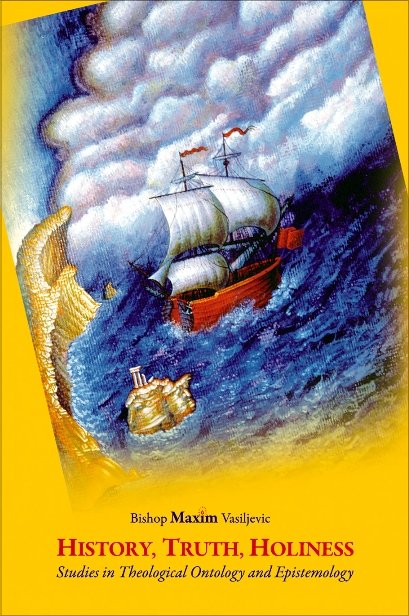
History, Truth, Holiness

by Bishop Maxim Vasiljevic

Bishop Maxim’s first book, described by Fr. John Breck as an “exceptionally important collection of essays” contributing to both the theology of being and also contemporary theological questions, is now available! Christos Yannaras describes Bishop Maxim as “a theologian who illumines” and Fr. John McGuckin identifies his work as “deeply biblical and patristic, academically learned yet spiritually rich.” The first half of the book collects papers emphasizing theological ontology and epistemology, reminding us how both the mystery of the Holy Trinity and that of the Incarnation demand that we rethink every philosophical supposition; it includes chapters on holiness as otherness, truth and history, and the biochemistry of freedom. The second half of the book features lectures dedicated to the theological questions posed by modern theology, including studies of Orthodox and Roman Catholic ecclesiology, liturgics, and the theology of icons.