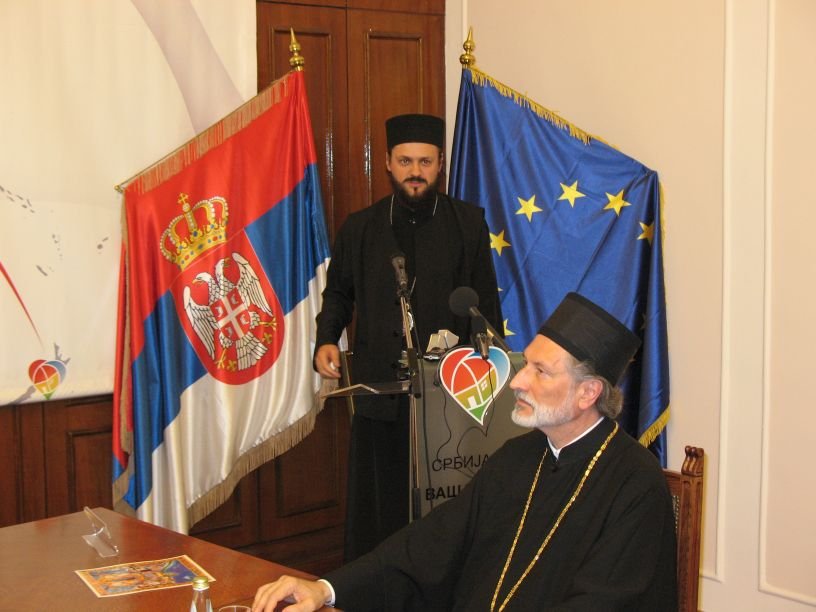
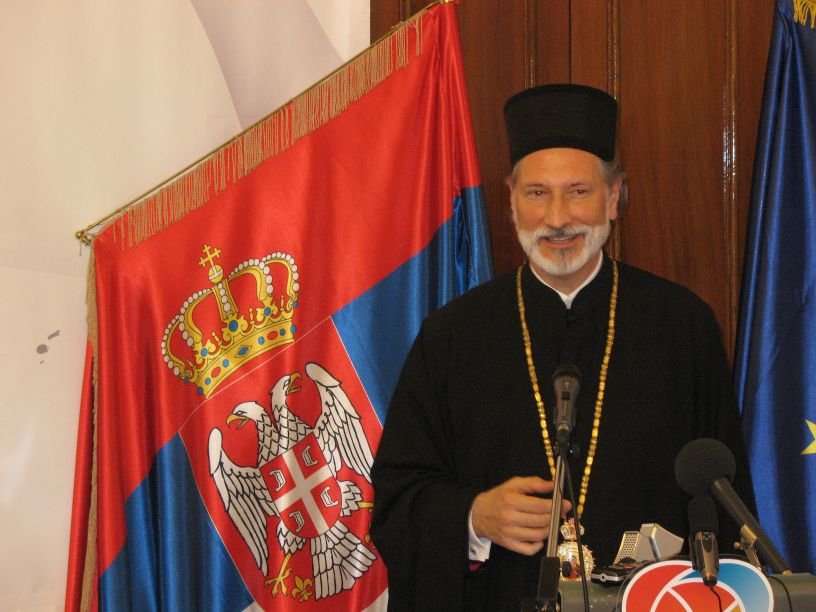
The discussion was opened by the president of Serbian Unity Congress Dr Slavka Draskovic, and the State Secretary for the Ministry of Religion and Diaspora Prof. Dr Bogoljub Sijakovic, and the participants were also addressed by the Bishop of Australia and New Zealand Irinej Dobrijević and the Bishop of North America Dr Maksim Vasiljevic, as well as numerous experts from the Academy of Sciences, the Historical Institute of SANU, and Universities that are concerned with the issue of diaspora, identity and religion, while the leaders of the Serbian diaspora addressed the participants in written form. .
Bishop Irinej talked about the subject: Church – the pivot of Serbian unity, a short overview of the relationship between the Serbian diaspora and the Serbian Orthodox Church, and the Bishop Maksim spoke on the subject: Serbica Americana as a challenge and achievement. “The essence of our Serbian history in the diaspora is equally woven into the material of zestful new nations, as it is in the “comfy” historical material of the Serbian people and the Serbian Orthodox Church, which is the pivot of the Serbian population in the diaspora”, said Bishop Irinej.
In the name of the organizers, Dr Slavka Draskovic said that the representatives of the Serbian diaspora all over the world are expressing concern over Serbia’s continuous inability of Serbia to establish a purposeful institutional framework for connecting the motherland and diaspora and carrying out fruitful projects which would enable the diaspora to contribute through both human and material resources. The results of numerous financial researches on the relationship between the motherland and diaspora point to a complete lack of a connection between the value system of the diaspora, its performance, and the implementation of these values in Serbia, said Dr Draskovic. As a result, the main point of the diaspora’s existence – a huge factor for the economic survival of Serbia – is excluded and forgotten, and its need for the motherland to advance is overlooked. She stressed how the Serbian Church in diaspora, on the contrary, has always been one with the people and used to be the cohesive factor that held, protected, and unified them, and called upon the new State authorities to preserve the Ministry of Religion and Ministry of Diaspora so that it would, working even more efficiently, be a guarantee for establishing the institutional links with diaspora which Serbia is in need of.
Leaders of the Serbian diaspora, Miroslav Michael Djordjevich and Prof. Dr Samuel Mikolasky, also stressed the importance of the diaspora for Serbia in their speeches for the round table which were read out to the participants of the discussion. Michael Djordjevic underlined the historically irrefutable fact that the Serbian Orthodox Church was the most important factor in the preservation of the Serbian identity in the past, and that today, as the recent research of the “Studenica” Foundation reveals, 89% of Serbs are concerned for the Serbian identity and wish to preserve it. However, neither the motherland neither the diaspora have the answers to this existential question, nor is there a consensus on how to solve it, said Djordjevic, and called upon the State to preserve the Ministry for Diaspora and to keep strengthening their ties with the diaspora because that is primarily in the interest of Serbia and its road out of the crisis.
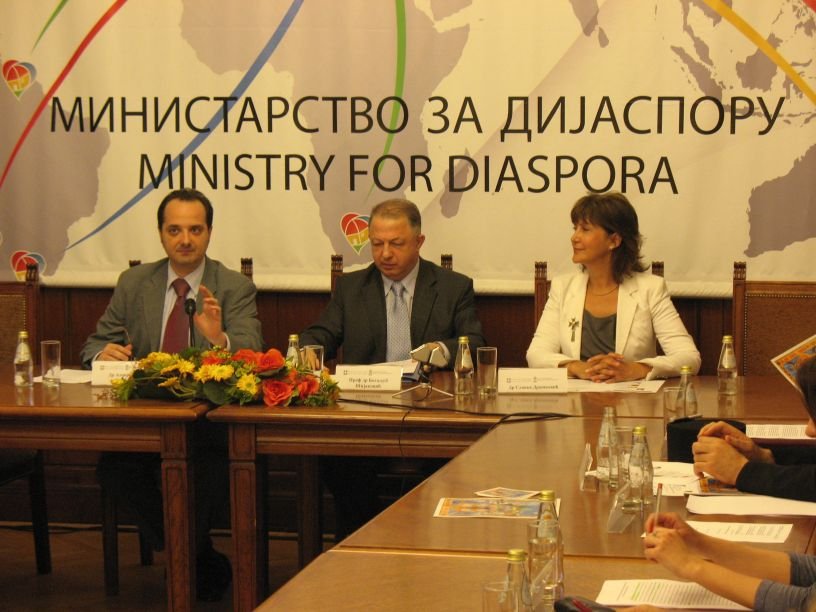
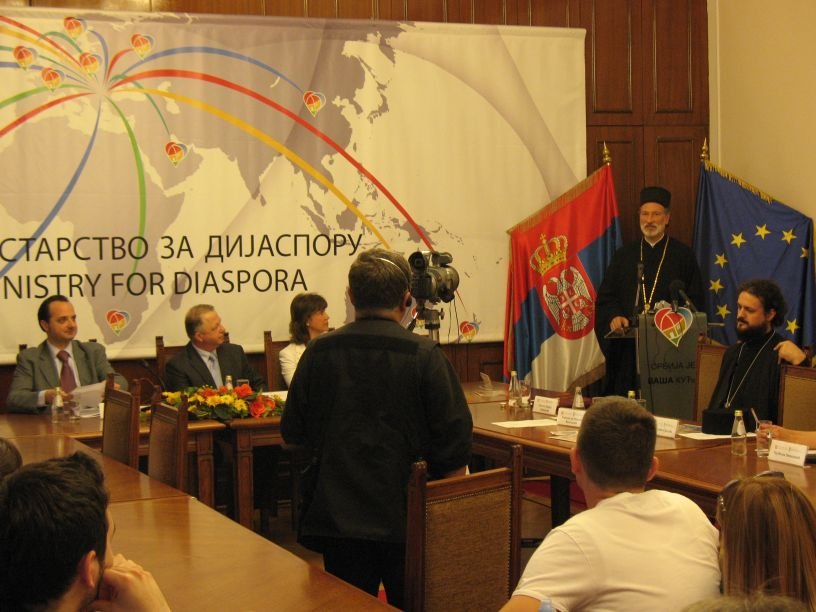
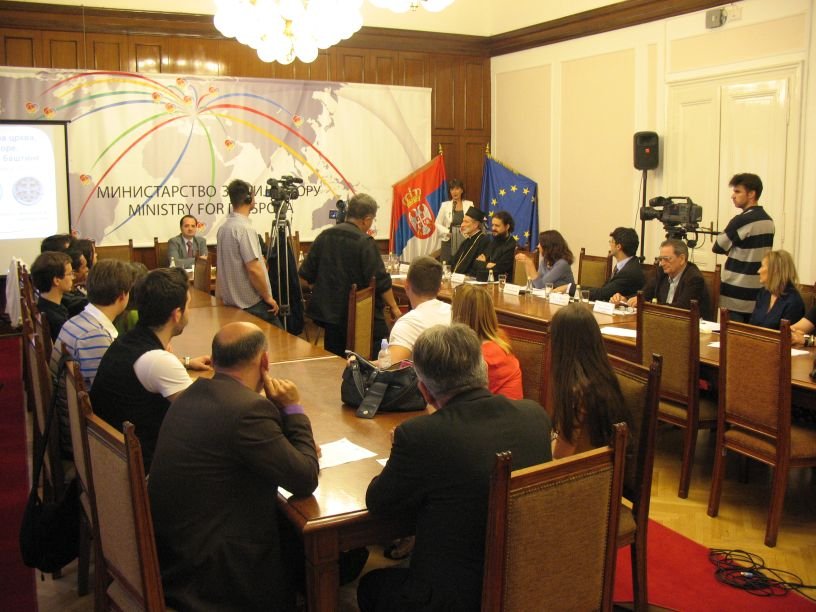
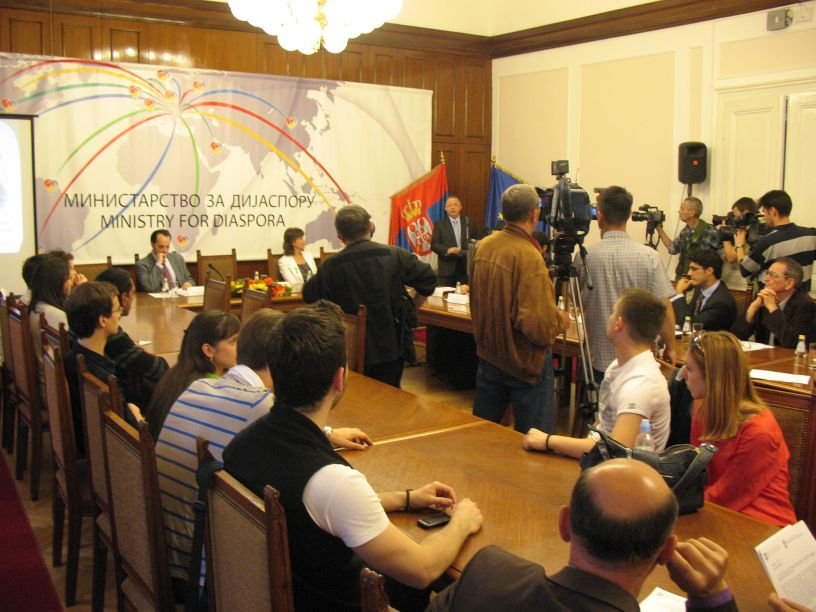
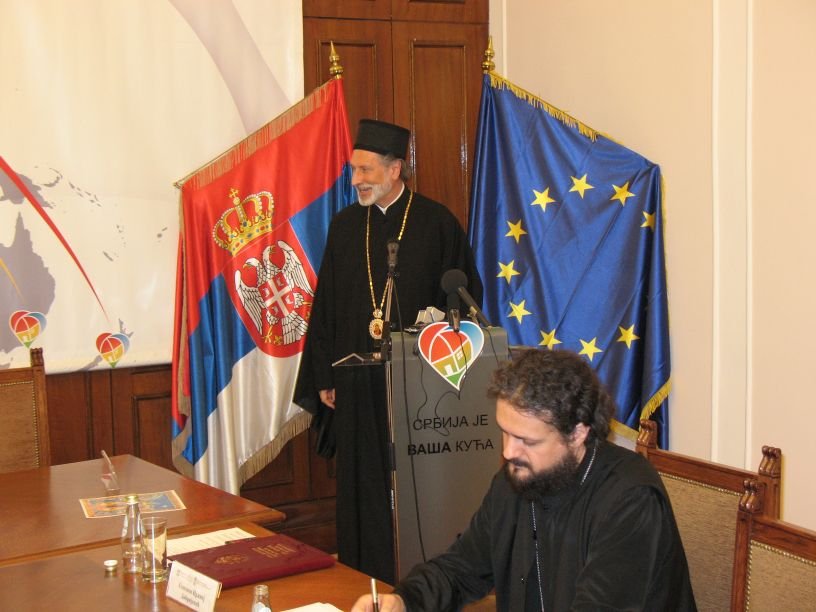
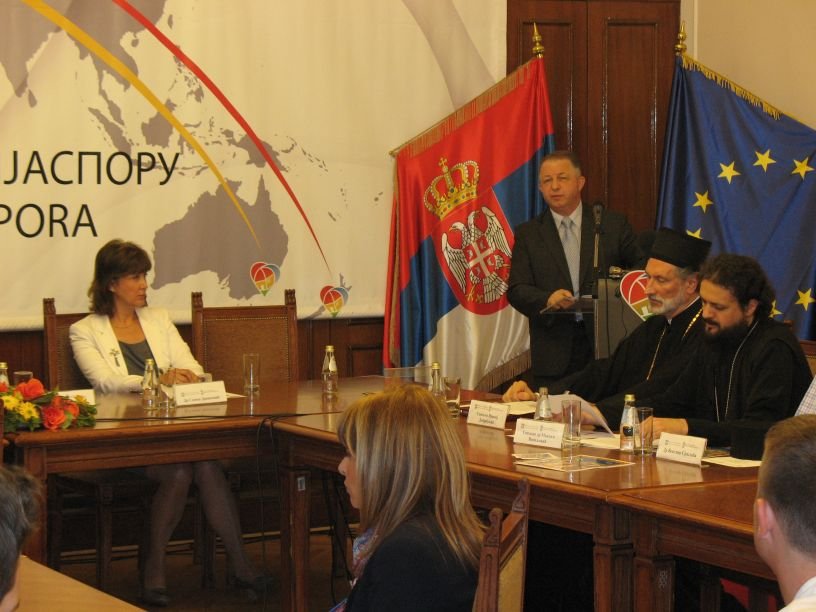
The meeting was specially addressed by the State secretary in the Ministry of Religion and Diaspora Prof. Dr Bogoljub Sijakovic, then Prof. Dr Vladimir Grecic from the Institute for International Politics and Economics, Mr Vesna Djikanovic who is the Assistant researcher at the Institute for Modern Serbian History, and Dr Petar Dragisic who is the Science assistant at the Institute for Modern Serbian History, while the discussion was moderated by Aleksandar Rakovic, the Advisor for international relations with the Ministry of Religion and Diaspora.
Orthodox Christianity and the Serbian Church can still be an important cohesive factor for out people in the diaspora, and it should remain that way, but the State needs to involve itself more through institutions and methodically, the message is from the round table discussion.