A great man is one who collects knowledge the way a bee collects honey and uses it to help people overcome the difficulties they endure - hunger, ignorance and disease!
- Nikola Tesla

Remember, remember always, that all of us, and you and I especially, are descended from immigrants and revolutionists.
- Franklin Roosevelt

While their territory has been devastated and their homes despoiled, the spirit of the Serbian people has not been broken.
- Woodrow Wilson

Art and Reality: Serbian Perspectives

Art and Reality: Serbian Perspectives
Friday, May 1, 2015, 6:00 pm
Marshall D. Shulman Seminar Room (1219 IAB, 420 W 118th St.)

Please join the East Central European Center and the Harriman Institute for a talk by Svetlana Rakić.

Rakić will present some of the most recent trends in Serbian two-dimensional art. Selected examples testify to the diversity, vibrancy, and beauty of art produced in this troubled country during the turbulent past two decades. Having witnessed their former country, Yugoslavia, torn apart by civil war, and their ‘new’ country, Serbia, crippled by NATO bombings, political intrigues, corruption, staggering unemployment, and bleak prospects for recovery, these artists have turned to the creative potential of the human imagination to escape, confront, and comment on a situation over which they have no control. Despite the specificity of the conditions under which Serbian artists live and work, their works of art – poignant, inspiring, humorous, or despairing – touch a responsive chord in the viewer that attests to their success at achieving an expression that is both universal and human.

.

Svetlana Rakić was born in Sarajevo (now Bosnia-Herzegovina) in 1958. She left her home country, Yugoslavia, in 1992 to come to the U.S. She received her M.A. in art history from the University of Belgrade, Serbia, in 1989 and her Ph.D. in art history from Indiana University, Bloomington in 1999. She teaches art and art history as a full professor at Franklin College, Indiana. Rakić is the author of two books on icons from Bosnia-Herzegovina, a book on the twentieth-century American painter Alexander Markovich, and numerous articles published in academic journals in Yugoslavia, Serbia, and the United States. Before coming to the U.S., Rakić worked as a curator at the State Art Gallery of Bosnia-Herzegovina in Sarajevo and as a consultant at the Institute for Preservation of Cultural Heritage of Bosnia-Herzegovina in Sarajevo. In addition to her interest in pre-modern and modern Western art, Rakić is a painter and has exhibited her works in the U.S., Germany, and Serbia.  

Sponsored by the Njegos Endowment for Serbian Language and Culture.


SA


People Directory

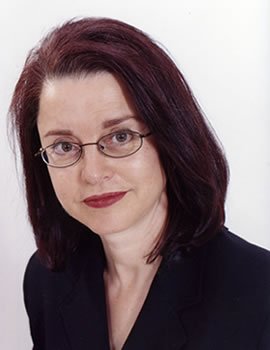
Zorica Pantić

Zorica Pantic, born circa 1951 in the former Yugoslavia, is a college administrator and professor of electrical engineering. In 2005 she was appointed the fourth president of Wentworth Institute of Technology in Boston.

Pantic was previously the founding Dean of the College of Engineering at the University of Texas at San Antonio and was Director of the School of Engineering at San Francisco State University.

Read more ...

Publishing

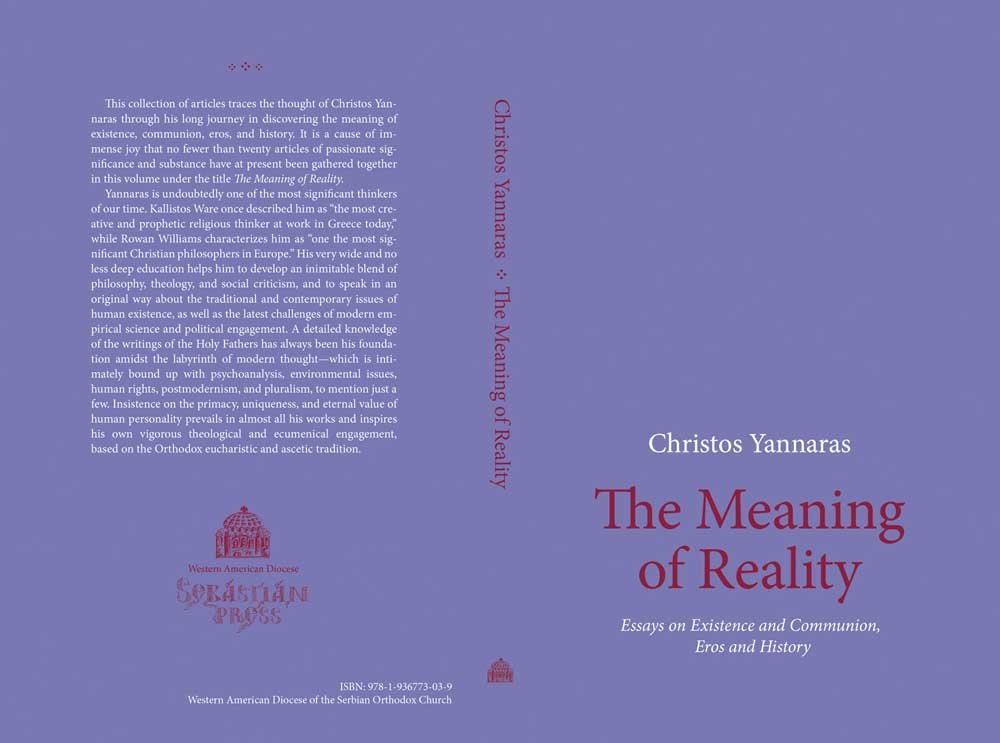
The Meaning of Reality

Essays on Existence and Communion, Eros and History

by Christos Yannaras

The collection of articles traces the thought of Christos Yanaras through his long journey in discovering the meaning of existence, communion, eros, and history. It is a cause of immense joy that no fewer than twenty articles of passionate significance and substance have at present been gathered together in this volume under the title The Meaning of Reality.

Yannaras is undoubtedly one of the most significant thinkers of our time. Kallistos Ware once described him as "the most creative and prophetic religious thinker at work in Greece today," while Rowan Williams characterizes him as "one of the most significant Christian philosophers in Europe." His very wide and no less deep education helps him to develop an inimitable blend of philosophy, theology, and social criticism, and to speak in an original way about the traditional and contemporary issues of human existence, as well as the latest challenges of modern empirical science and political engagement. A detailed knowledge of the writings of the Holy Fathers has always been his foundation amidst the labyrinth of modern thought - which is inimately bound up with psychoanalysis, environmental issues, human rights, postmodernism, and pluralism , to mention just a few. Insistence on the primacy, uniqueness, and eternal value of human personality prevails in almost all his works and inspires his own vigorous theological and ecumenical engagement, based on the Orthodox eucharistic and ascetic tradition.